

Search Engine Marketing vs Search Engine Optimization: A Practical Guide to Choosing the Best Strategy
In the world of digital marketing, choosing between Search Engine Marketing vs Search Engine Optimization (SEO) is crucial. SEM includes both paid and organic strategies, while SEO focuses on organic traffic. This article will clarify the differences, benefits, and ideal scenarios for using each, helping you make a well-informed decision.
Key Takeaways
- Search Engine Optimization (SEO) focuses on increasing organic traffic to improve a website’s position on search engine results pages (SERPs), while Search Engine Marketing (SEM) includes both SEO and paid strategies like Pay-Per-Click (PPC) advertising for broader visibility.
- The choice between SEO and SEM should be based on business goals; SEO is beneficial for long-term growth and cost-effectiveness, whereas SEM offers immediate results and is suitable for short-term needs or competitive markets.
- Integrating SEO and SEM can enhance digital marketing effectiveness, as strong SEO foundations improve SEM performance and data from SEM campaigns can refine SEO strategies.
Search Engine Marketing vs Search Engine Optimization: A Practical Guide to Choosing the Best Strategy
Search Engine Optimization (SEO) aims to increase traffic through organic search results, focusing on improving a website’s position on search engine results pages (SERPs) without paying for placement. Search Engine Marketing (SEM), on the other hand, encompasses both SEO and paid search strategies, such as Pay-Per-Click (PPC) advertising, to enhance a website’s visibility on search engines.
Selecting SEO or SEM relies on your goals and the urgency of results. While SEO focuses on long-term growth by improving organic results, SEM can provide immediate visibility through paid search strategies. Recognizing these differences helps in crafting a marketing strategy that suits your business objectives.
Introduction
Search Engine Optimization (SEO) and Search Engine Marketing (SEM) are two pillars of modern digital marketing. While they share a common goal—maximizing online visibility—their approaches and techniques vary significantly. Effective planning of SEO and SEM campaigns drives more traffic to your web pages and helps meet your business goals.
This blog post unravels the complexities of SEO and SEM by comparing their techniques, costs, and timeframes. It also explores the best scenarios to use each strategy and how to combine them for optimal results. Whether you’re a marketing novice or an experienced professional, this guide will provide valuable insights to enhance your digital marketing efforts.
Understanding SEO and SEM
Before exploring the specifics of SEO and SEM, understanding what each term entails is important. Search Engine Optimization (SEO) focuses on increasing traffic through organic search results by improving a website’s ranking on search engine results pages (SERPs). This involves a variety of techniques aimed at enhancing a site’s relevance and user experience.
Search Engine Marketing (SEM), on the other hand, includes both SEO and paid methods, such as PPC advertising, to drive traffic and increase visibility. SEM aims to rank a website in both organic and paid search results, providing a broader scope compared to SEO. Grasping these foundational concepts prepares for a deeper exploration into their components and benefits.
What is SEO?
Search Engine Optimization (SEO) is all about enhancing a website’s organic search visibility through various optimization techniques. SEO aims to rank high on search engine results pages (SERPs) for specific keywords, driving organic traffic to the site. The main goal of SEO is not only to attract traffic but also to improve user experience, which ultimately leads to higher engagement and conversions.
SEO includes several subcategories:
- On-page SEO involves optimizing individual web pages to rank higher, including keyword research, content quality, and meta descriptions.
- Off-page SEO focuses on building high-quality backlinks and other external signals to improve search engine rankings.
- Technical SEO ensures that search engines can crawl and index website pages effectively, enhancing overall site performance.
Marketers must consider factors like content quality, mobile friendliness, and site speed to optimize for search engines. These elements help improve a website’s relevance and usability, making it more attractive to both users and search engines. Focusing on these areas helps businesses achieve sustained growth and improved online visibility.
What is SEM?
Search Engine Marketing (SEM) is a broader concept that includes both organic and paid methods to drive traffic from search engines. SEM combines SEO strategies with paid search tactics, such as PPC advertising, to enhance online visibility. This approach allows businesses to quickly increase website traffic by paying based on user engagement.
SEM uses various tactics, including text-based search ads and shopping ads with product images and prices. By integrating these methods, SEM provides a comprehensive strategy to achieve better visibility on search engines, catering to both short-term and long-term business goals.
Key Differences Between SEO and SEM
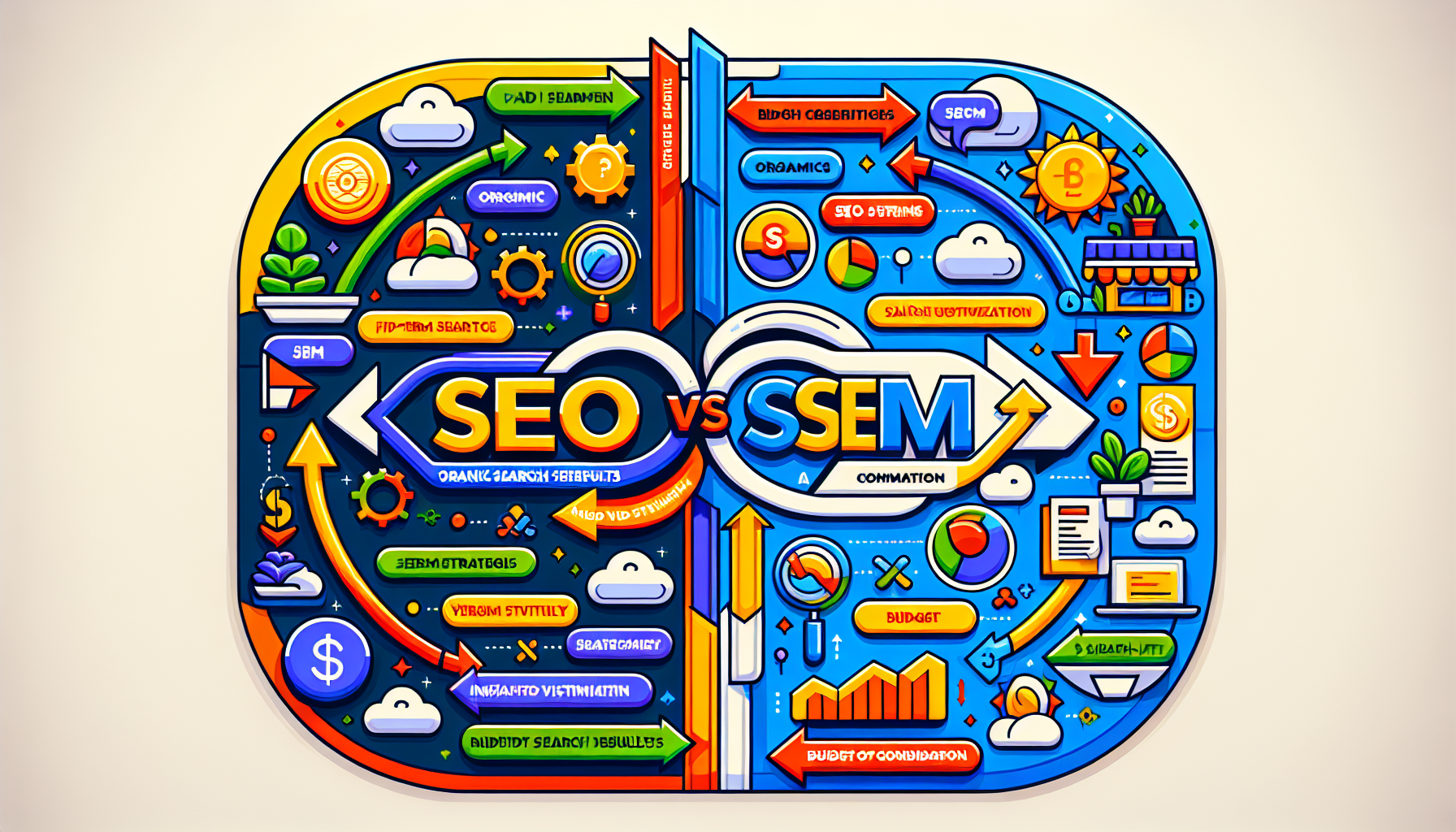
While both SEO and SEM aim to enhance visibility on search engines, they utilize distinct strategies. SEO focuses on organic methods, such as optimizing content and building backlinks, to improve a website’s ranking on search engine results pages (SERPs). SEM, however, incorporates paid advertisements alongside SEO to achieve immediate and long-term visibility.
Grasping the key differences between SEO and SEM helps businesses allocate resources and plan their digital marketing strategies effectively. Both approaches use unique methodologies and aim for specific outcomes in driving web traffic, so evaluating market competition and business goals is necessary before choosing a strategy.
Techniques Used in SEO vs SEM
Both SEO and SEM require thorough keyword research to identify relevant search terms and optimize content accordingly. In SEO, it means finding keywords that match user search intent and incorporating them into high-quality content and meta descriptions. SEM focuses on identifying keywords for paid ads and setting bids to secure ad visibility.
While SEO techniques include on-page optimization, off-page strategies, and technical improvements, SEM involves creating ad content, targeting specific audiences, and setting bids for google ads placements.
These distinct approaches highlight the differences in how SEO and SEM achieve their goals.
Costs Associated with SEO vs SEM
SEO can incur costs for tools and services but does not require direct payment to rank organically. Investments in optimization, content creation, and building high-quality backlinks are essential for effective SEO. Once a site achieves high organic rankings, it requires less ongoing investment compared to PPC.
SEM, particularly PPC ads, requires upfront payments for paid advertising placements. The costs can vary widely, from $100 to $10,000 per month, depending on the competitiveness of the keywords and the scope of the campaign. While SEM provides immediate traffic, the costs can add up quickly, especially if the campaigns are not managed effectively.
Timeframe for Results
One of the most significant differences between SEO and SEM is the timeframe for seeing results. SEM efforts can yield instant visibility, often delivering results on the same day the campaign is launched. This makes SEM an attractive option for businesses needing quick traffic boosts.
In contrast, SEO typically takes several months to a year to produce significant outcomes. The results of SEO are a gradual process, requiring consistent efforts to build organic rankings over time. Knowing these timeframes aids businesses in selecting the appropriate strategy based on their needs and goals.
When to Use SEO
SEO is critical for businesses aiming for long-term growth and sustained online visibility. It’s particularly effective for companies with minimal budgets that need to rely on organic traffic rather than paid ads. Focusing on SEO allows businesses to establish a strong online presence and build credibility over time.
Benefits of SEO
One of the major advantages of SEO is its cost-effectiveness. Over time, as organic traffic increases, the need for ongoing ad spend reduces, making SEO a sustainable long-term strategy. SEO also enhances website usability, making it easier for users to navigate and engage with the content.
Additionally, a well-executed SEO strategy can significantly improve brand credibility and recognition among target audiences. Investing in SEO helps businesses achieve higher visibility and user engagement, leading to more conversions and sustained growth.
Ideal Situations for SEO
SEO is particularly beneficial for businesses aiming to establish brand authority and focus on organic traffic. It’s ideal for industries where establishing long-term credibility and visibility is crucial. For example, companies in niches with less competition but high search volume can benefit significantly from SEO efforts.
SEO investment benefits businesses aiming for consistent online visibility and engagement over time. By focusing on relevant keywords and building high-quality backlinks, companies can achieve sustained growth and improved search engine rankings.
When to Use SEM
SEM is ideal for scenarios requiring immediate visibility and quick traffic boosts. It is particularly effective for new businesses or product launches that need instant exposure. SEM can also be beneficial in highly competitive markets where organic rankings are challenging to achieve.
Benefits of SEM
One significant advantage of SEM is the immediate presence it provides in search results, creating instant visibility. PPC advertising can generate traffic within minutes, allowing businesses to quickly reach their target audiences. SEM also offers budget flexibility, as the cost of PPC is typically lower than SEO in the short term.
Higher Quality Scores in SEM improve visibility and reduce costs, making it a cost-effective strategy for maximizing marketing budgets.
Ideal Situations for SEM
SEM is particularly advantageous for new website launches, as it provides immediate visibility in search results. It’s also ideal for short-term promotions, allowing businesses to drive traffic quickly during time-sensitive offers.
In highly competitive keyword spaces, SEM enables businesses to gain visibility and attract traffic that would otherwise be difficult to capture organically.
Combining SEO and SEM for Optimal Results
Using both SEO and SEM forms a comprehensive marketing strategy that boosts online visibility. A blended approach can improve overall digital marketing effectiveness, catering to both immediate and long-term business objectives.
Combining these strategies helps businesses optimize their marketing efforts and achieve better results.
How SEO Enhances SEM
Strong SEO foundations provide a robust base for SEM campaigns, enhancing overall performance. Good SEO practices can lead to improved ad quality, which directly influences SEM performance by reducing costs-per-click and improving ad placement.
Integrating SEO strategies with SEM ensures optimal performance and better utilization of marketing budgets.
How SEM Supports SEO
Data from SEM campaigns can provide valuable insights that help refine SEO strategies. By analyzing performance metrics from SEM, businesses can identify effective keywords and content strategies to improve ongoing search traffic efforts.
This synergy between SEO and SEM enhances overall digital marketing effectiveness.
Building a Balanced Digital Marketing Strategy

Understanding the roles of SEO and SEM can significantly impact a company’s digital marketing strategy and budget allocation. Integrating paid and unpaid tactics is the core of an effective SEM strategy, allowing businesses to attract a broader audience and improve marketing efforts.
Combining SEO and SEM generates valuable data that can guide necessary adjustments and optimize overall performance.
Assessing Your Goals and Resources
Defining clear marketing goals is essential, as they guide the strategy for allocating resources between SEO and SEM. Identifying specific business objectives helps determine the appropriate balance between these strategies.
Assessing competition and available resources is critical in planning effective SEO and SEM initiatives.
Implementing and Monitoring Your Strategy
One of the major advantages of SEM is the ability to track and measure the effectiveness of ad campaigns in real-time. Ensuring that your KPIs align with your overall goals is crucial for accurately tracking performance and making necessary adjustments.
Regularly analyzing performance metrics helps refine both SEO and SEM strategies, ensuring long-term success.
Summary
Understanding when to use SEO versus SEM is crucial for crafting an effective digital marketing strategy. SEO focuses on long-term growth and visibility through organic search results, while SEM offers immediate visibility through paid strategies. Each approach has its unique benefits and ideal use cases, making it essential for businesses to evaluate their specific goals and resources before choosing the right strategy.
By combining SEO and SEM, businesses can create a balanced marketing strategy that leverages the strengths of both approaches. This synergy ensures optimal performance, better utilization of resources, and improved online visibility, ultimately leading to sustained growth and success. Embrace the power of both SEO and SEM to achieve your business objectives and stay ahead in the competitive digital landscape.
Looking for SEO and SEM services? contact us today and get a FREE Quote!


